
How do porta potties work?
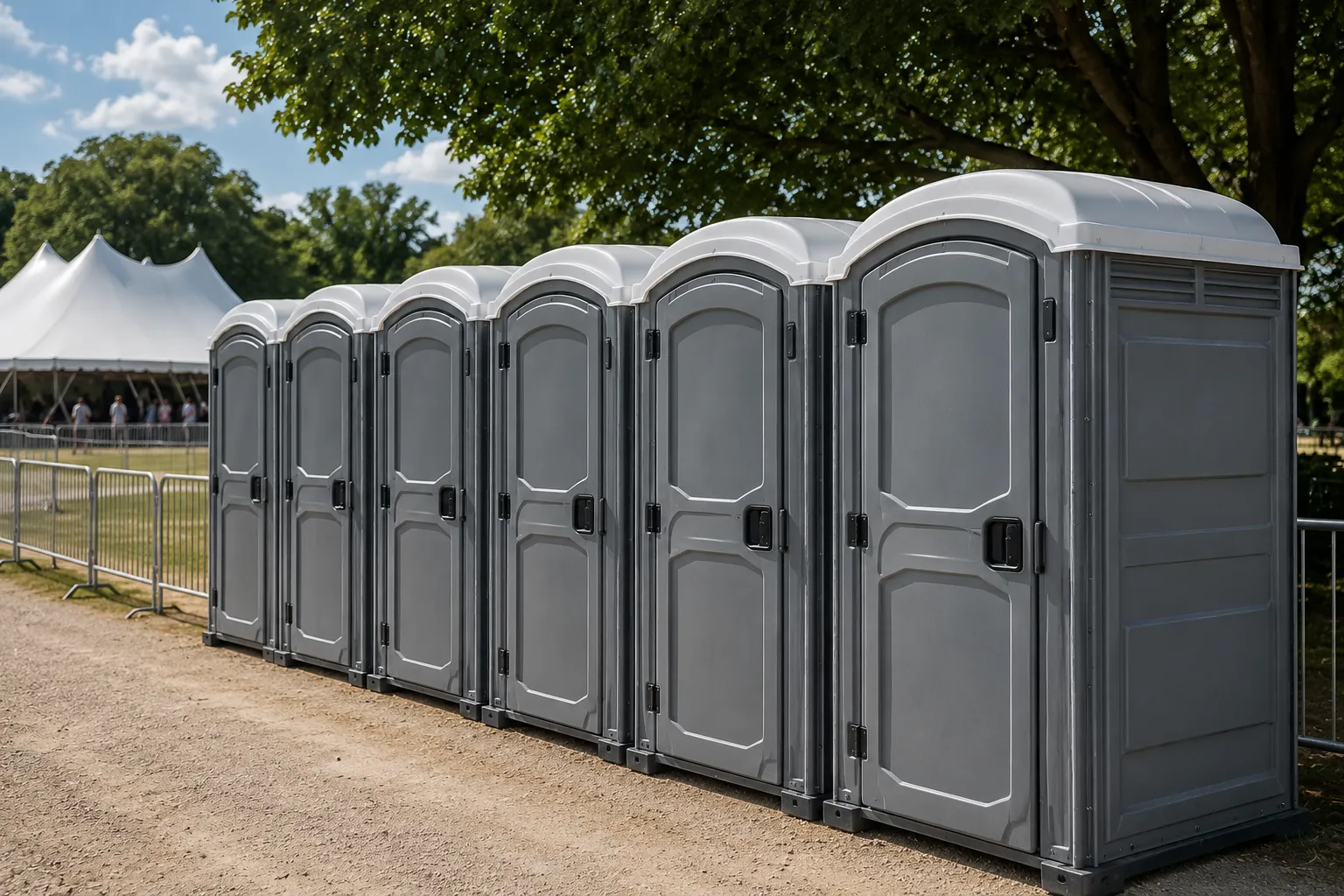
Under the seat sits a holding tank, typically 60 to 70 gallons on a standard unit. The unit itself runs about 44 by 48 inches on the ground and stands roughly 92 inches tall, so it fits tight jobsite corners around Kokomo without eating much space. There is no flush and no water hookup. Waste drops straight into the tank, where a blue chemical treats it, knocks down odor and starts breaking down solids between service visits. A vent stack pulls air out the top instead of back through the seat, which is why a well-maintained unit smells far less than people expect. Toilet paper hangs inside, and most units have a hand sanitizer dispenser near the door since there is no sink. For a construction worker running to a porta potty rental between tasks, the whole visit takes seconds, no different than a fixed restroom except for the flush. Service crews pump the tank, wipe surfaces and restock paper on a route, and ANSI/PSAI Z4.3 sets a baseline interval of one visit per week for up to 10 users over a 40 hour week, more often on busy sites.
How does a portable sink work?
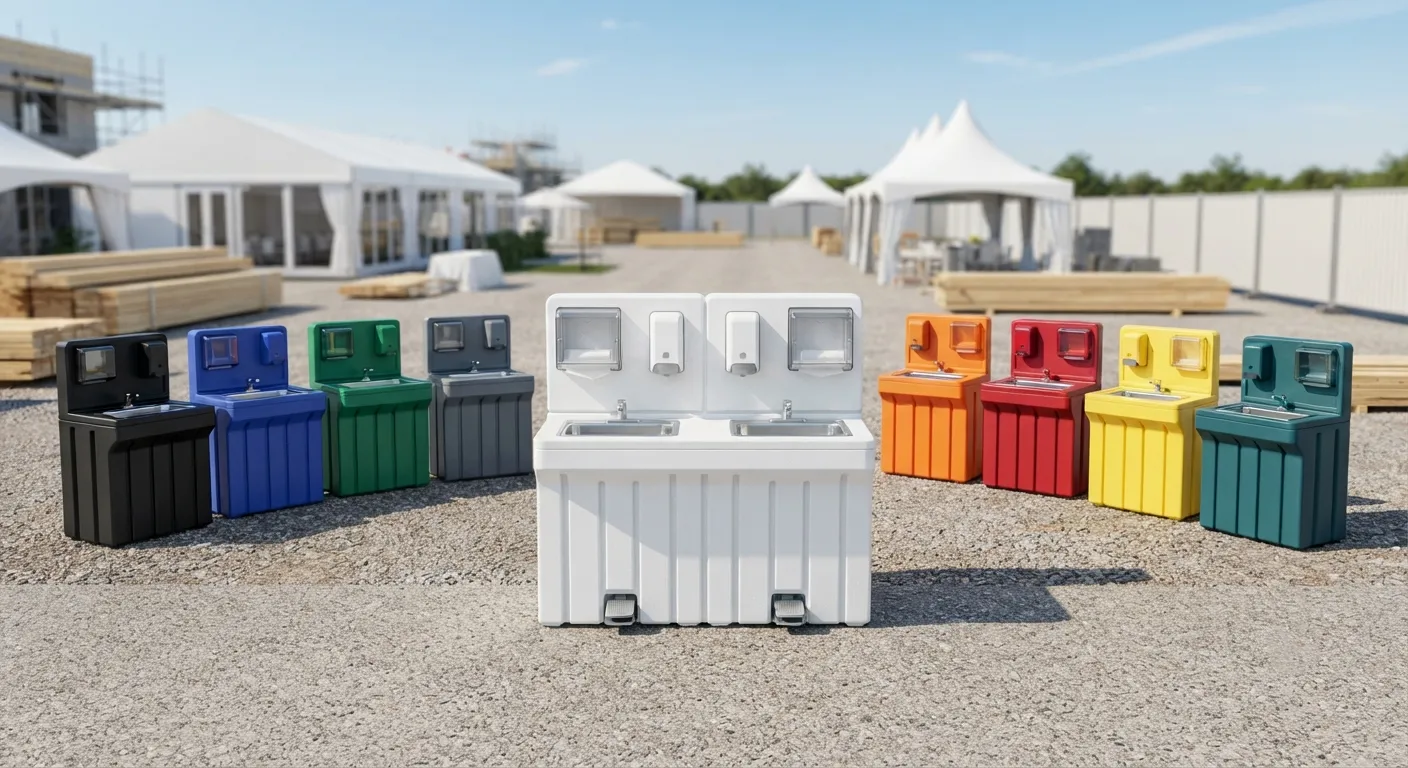
A portable sink runs on a self-contained system: a fresh water tank feeds the faucet by a small pump or gravity, and a separate gray water tank below catches the runoff. No plumbing hookup needed, which is why they pair well with handwashing station rental setups on job sites around Kokomo. Soap dispensers mount on the unit, and 29 CFR 1910.141(d)(2) requires soap and towels or a hand-drying device at washing facilities, not just sanitizer. That rule matters for food trucks, farm crews and any site doing painting or chemical work. OSHA 1926.51(f)(1) specifically requires washing facilities where workers apply paints, coatings, herbicides or insecticides, so a portable sink next to a temporary fence rental perimeter on a spray job is not optional. Some crews ask about hand sanitizer station rental instead, but sanitizer does not satisfy the washing requirement on its own. A full portable sink tank gets swapped or refilled on the same service run as the toilets, keeping both fresh water and gray water within the levels a route driver checks each stop.
How do flushable porta potties work?
A deluxe flushable porta potty adds a small onboard fresh water tank and a foot pump or pressurized flush that rinses the bowl into the same holding tank below. It looks and feels closer to a household toilet, and some units include a hand wash sink built into the unit itself rather than a separate station. These run from the low end of a day rate up toward higher weekly pricing depending on features, so a two-day wedding on the edge of Kokomo and a month-long build near Cassville, 7.9 miles north, land in very different columns. An ADA accessible porta potty can come in either standard or flushable configuration, and ADA Standards section 304.3.1 requires a 60 inch turning circle inside those units so a wheelchair user can maneuver. ADA Standards section 213.2 also requires that at least 5 percent of clustered single-user units be accessible, never fewer than one, which matters for county fairs, races and larger builds that order units in blocks rather than one at a time.
How do camping porta potties work?
Camping setups work the same core way: sealed tank, chemical treatment, no water needed, which is why they show up at farms, hunting camps and remote sites around Kokomo where there is no septic or sewer access at all. A camping porta potty or a unit ordered through emergency porta potty rental gets dropped, used for the event or season, then pumped out and hauled away, similar to how a septic pumping service empties a home tank. Speaking of which, a residential septic tank is typically pumped every 3 to 5 years depending on tank size and household size, a very different rhythm than a rented unit serviced weekly. Some campers ask about septic tank cleaning chemicals for their home system versus the chemicals used in a rented unit; they are not the same product, and dumping septic-safe treatments into a porta potty tank is not recommended. For remote agricultural work, OSHA 1928.110 requires field sanitation within a quarter mile walk for hand-labor employees, one facility per 20 workers, which is worth checking against farm and agricultural restrooms planning before season starts.
FAQ
Do porta potties smell if serviced on schedule?
Not much. The vent stack pulls odor up and out rather than back through the seat, and the chemical treatment keeps solids breaking down between visits. See do porta potties smell for what actually causes odor complaints, which is usually a missed service date, not the unit design itself.
How many porta potties does a Kokomo jobsite need?
OSHA 1926.51(c) sets the baseline: one toilet for 20 or fewer workers, then additional units as headcount rises past 20 and again past 200. Check how many porta potties do I need and OSHA portable toilet requirements for the full table before you order.
What does a standard rental cost per day in Kokomo?
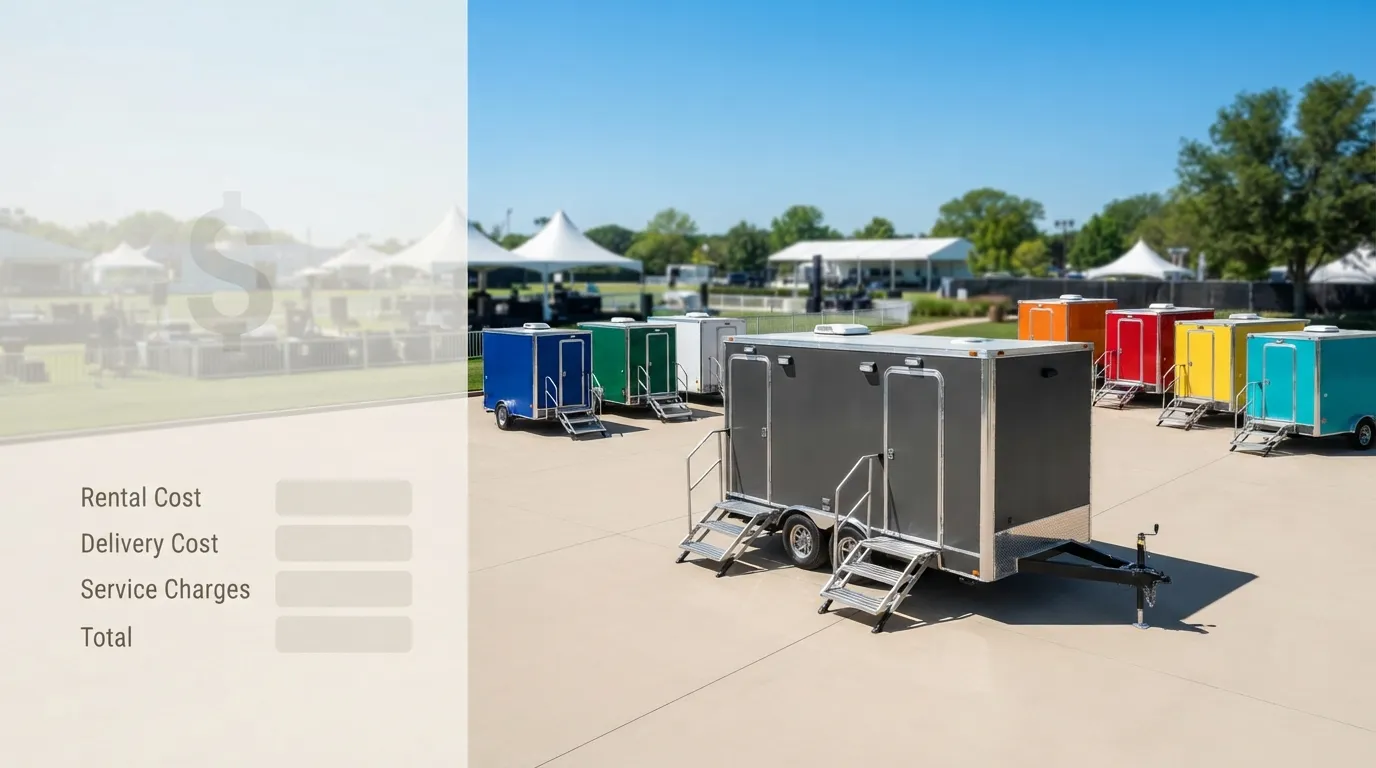
Standard unit day rates run from around $100 to $350 depending on duration and delivery distance. Full breakdowns, including weekly and monthly pricing, live at porta potty rental cost and porta potty rental per day.
Can a portable toilet go anywhere on my property?
Placement depends on ground stability, clearance for the service truck and sometimes local code. Right-of-way placement needs confirming with the city of Kokomo directly. Start with the porta potty placement guide and porta potty permit requirements before delivery day.
How often are units cleaned during a long rental?
Weekly is the baseline under ANSI/PSAI Z4.3 for up to 10 users over a 40 hour week, but high-traffic events need more frequent stops. See how often are porta potties cleaned for how route schedules adjust to usage.
Next step
Get a delivery date
Tell us the address, the dates and the headcount. We size the order and confirm the route.