
Where Should a Porta Potty Go on a Job Site or Yard?
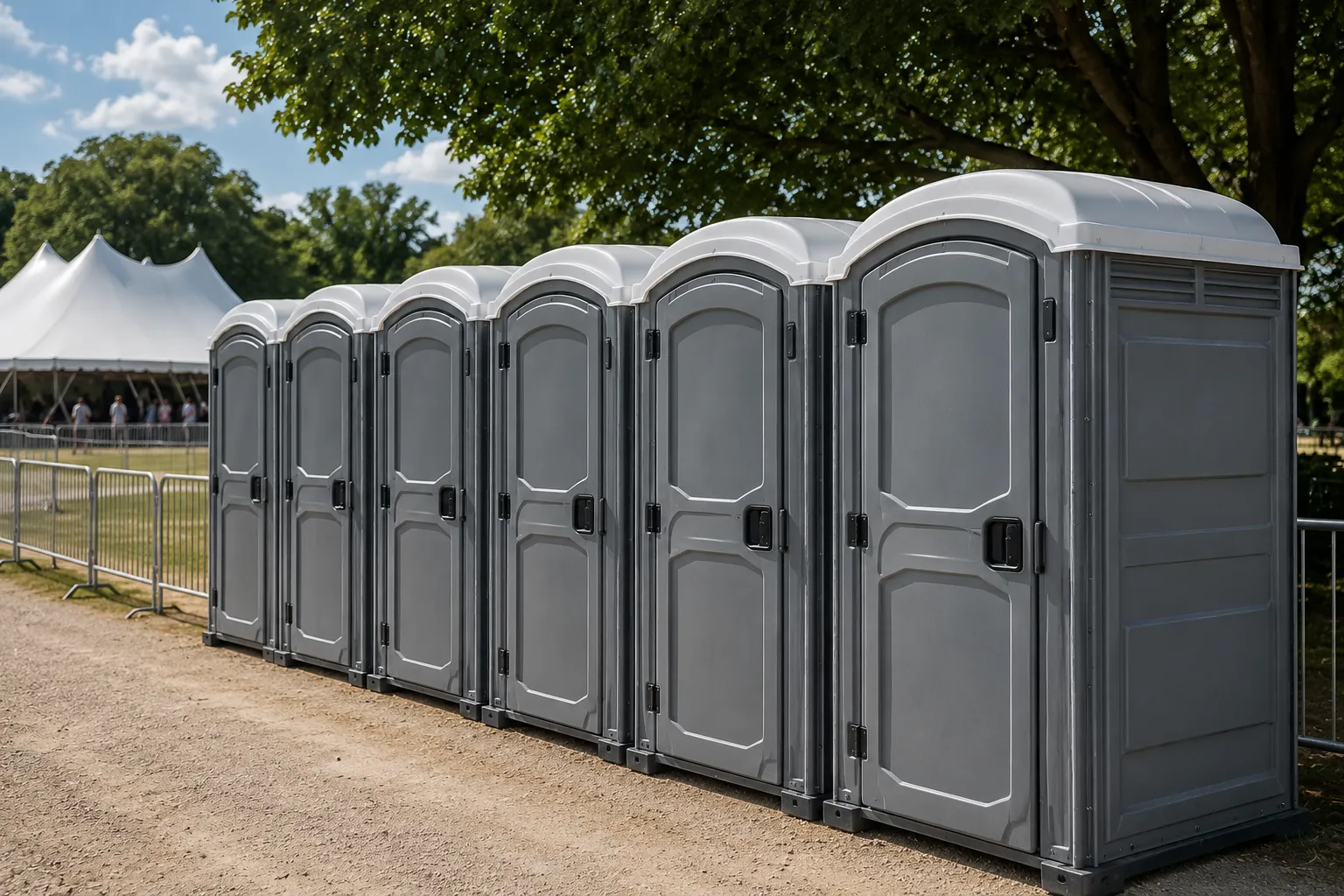
Start with the ground. ADA Standards section 302.1 calls for surfaces that are stable, firm and slip resistant, and that rule applies whether you're setting up a standard unit on a construction lot or an ADA accessible unit for an event. Avoid slopes, mud, and loose gravel that shifts under the base. Keep units within reach of the service truck; our crews generally need a clear path similar to the 60 feet of straight clearance a roll-off truck needs behind a dumpster, since the pump truck backs in the same way.
Don't set units under low branches or near soft turf that ruts after rain. Kokomo clay holds water, and a unit that sinks two inches during a wet week becomes a service problem, not a placement problem. If you're staging for a wedding or a big backyard build, check our porta potty placement guide partner page, the how many porta potties do I need calculator, and think about turnaround: units near the work zone but out of the main foot traffic line save the most steps over a long day.
Are There Permit Rules for Placement in Kokomo?
Placement in the public right of way, on a street or sidewalk, needs confirming with the City of Kokomo before delivery. We are not naming a specific ordinance here because permit rules vary by location and use, and guessing gets you a fine, not a fact. If your project also involves a roll-off dumpster or temporary fencing staged at the curb, the same rule applies: check with the city first. A dumpster placement permit cost and a porta potty placement permit are two different asks, and neither should be assumed clear just because a neighboring lot got one. Our dumpster permit requirements page walks through what to ask the city, and our porta potty permit requirements page does the same for restrooms. When in doubt, call before you place, not after.
How Much Space Does a Unit or Trailer Need?
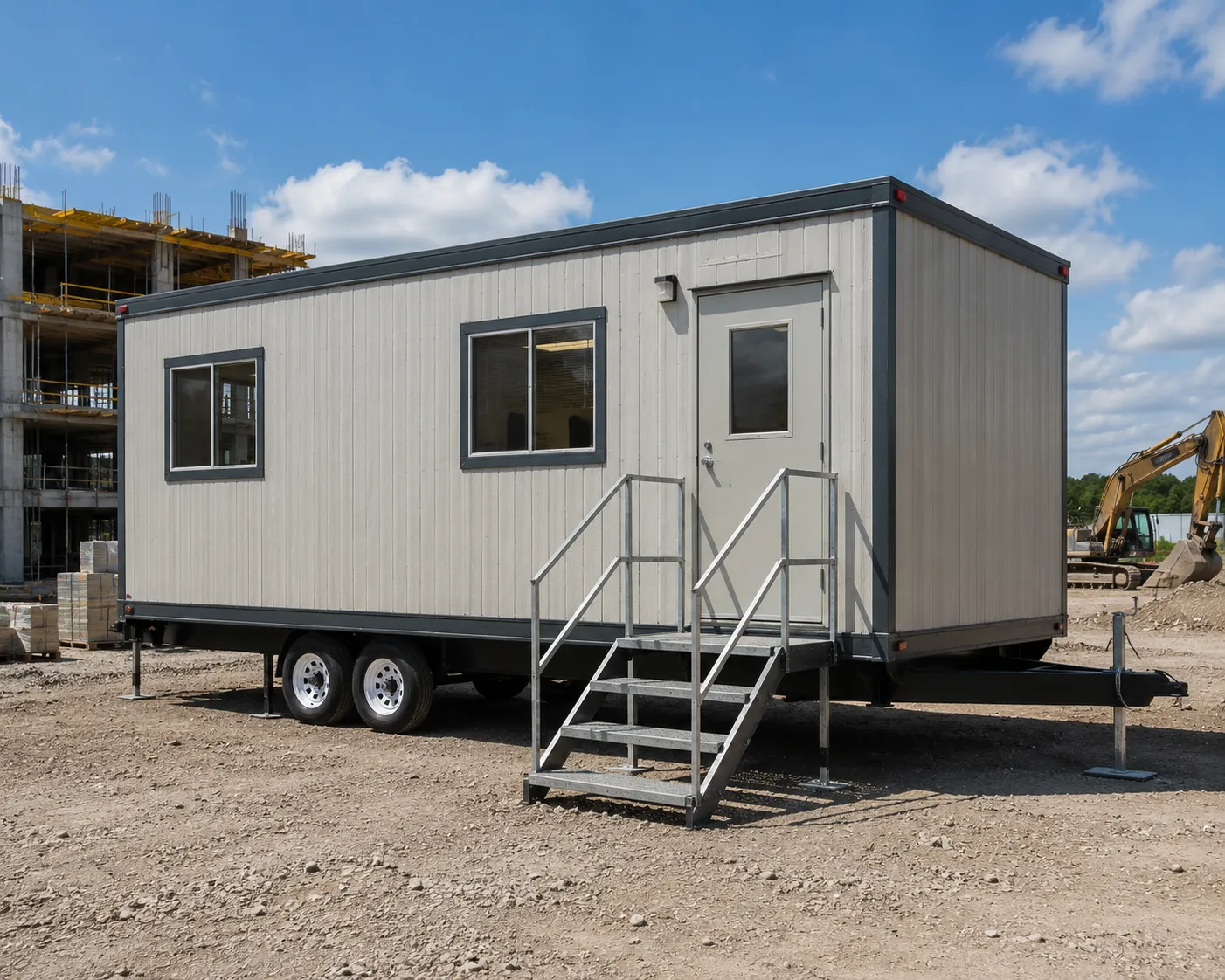
Space needs scale with the equipment. A standard unit stands about 92 inches tall and needs headroom to match, plus a service lane wide enough for the pump hose to reach the tank. Restroom trailers, whether a 2 stall or an 8 stall model, need a level pad and enough clearance to open the entry door, which under ADA Standards section 404.2.3 must have a minimum clear opening of 32 inches. Where units cluster for an event, ADA Standards section 213.2 requires at least 5 percent to be accessible, never fewer than one. Storage containers and mobile office trailers follow similar rules: a 20ft container or 40ft container needs a flat pad and truck access, and if a mobile office trailer replacement doors situation comes up mid-rental, that's a maintenance call, not a placement one, so flag it early with our storage container rental team.
| Setup | Footprint needed | Clearance behind unit |
|---|---|---|
| Standard porta potty | 44 x 48 inches | Service truck access |
| ADA unit | 44 x 48 inches, wider door swing | 60 inch turning circle nearby |
| Roll-off dumpster | Varies by yard size | 60 feet straight clearance |
| Restroom trailer | Level pad, ramp if needed | Ramp slope max 1:12 |
Why Does Ground Slope and Access Matter So Much?
A unit set on uneven ground tips, leaks, and wears out its door hinges faster. ADA Standards section 405.2 caps ramp running slope at 1:12, which matters for restroom trailer ramps and any ADA unit approach. Access matters just as much for service. Our trucks follow the same weekly rhythm laid out in ANSI/PSAI Z4.3, which sets one service visit per week as the baseline for up to 10 users over a 40 hour week. Block that access with parked equipment or a fence line and your unit misses its cleaning.
This matters just as much outside city limits. We serve sites out toward Cassville, 7.9 miles north of Kokomo, and Center, 5.5 miles southeast, where gravel lanes and farm access roads need the same clearance planning as a downtown lot. If your project also involves septic pumping, the same access rule applies. A placerville septic pumping service model or ours here in Kokomo both need a truck path to the tank riser, not just to the yard.
How far from a building should a porta potty sit?
Far enough that odor doesn't drift toward doors and windows, but close enough for a short walk. There's no fixed number in code for this, so use judgment: keep units off building exhaust vents and away from low windows, and check our porta potty rental team for a site walk if you're unsure.
Does OSHA require a certain distance from the work area?
OSHA 1926.51(c) sets toilet counts by crew size, not distance, requiring one facility for 20 workers or fewer. Placement is left to reasonable access, so keep units close enough that a five-minute walk doesn't become a ten-minute break.
Can I place a unit in a gravel lot or unpaved area?
Yes, if the surface is stable and doesn't shift under the base, matching ADA Standards section 302.1's stable, firm, slip resistant standard. Compact gravel works. Loose fill or deep mud does not, and it will show up as a lean within days.
What about handwashing stations near the toilets?
Pair them close by. 29 CFR 1910.141(d)2) requires soap and towels or a hand dryer, not sanitizer alone, so a handwashing station or portable sink placed right next to the toilet bank keeps compliance simple and keeps people from skipping the step.
Do ozark river portable sink replacement parts affect placement?
No, replacement parts are a maintenance issue, not a siting one. Keep the sink on the same stable, level pad as your other units, and call our handwashing station rental line if a part needs swapping mid-rental.
Next step
Get a delivery date
Tell us the address, the dates and the headcount. We size the order and confirm the route.